Fire is the kind of risk most Dallas-Fort Worth small business owners hope they never have to think about. At DRH Insurance, we talk about it a lot anyway. It is rare enough that it feels like someone else’s problem, and bad enough that when it hits, it can close a beloved local shop for good. Commercial kitchens raise the odds. Ovens run hot, fryers hold gallons of oil, and grease collects in spots that are easy to miss during a hectic Saturday rush.
To keep this concrete instead of abstract, we want to walk you through a story. The bakery below is a composite, built from the kinds of situations we help business owners think through here in DFW. It is not a specific real client, and no real names are used. But the coverage details, the timeline, and the steps come straight from how commercial insurance and Texas claims rules actually work. By the end, you should understand what a small business fire insurance claim Dallas owners file after a kitchen fire really looks like, and what you can do today to get ready.
Meet the bakery: a composite DFW small business
Picture a small neighborhood bakery in a strip center off a busy DFW arterial road. Call it Sweet Corner Bakery. It leases about 1,800 square feet, employs six people between the counter and the kitchen, and runs steady weekday business with big weekend and holiday spikes for cakes and catering. The owner, like a lot of the small business owners we meet, poured years of savings into commercial ovens, mixers, proofing cabinets, display cases, and a walk-in cooler.
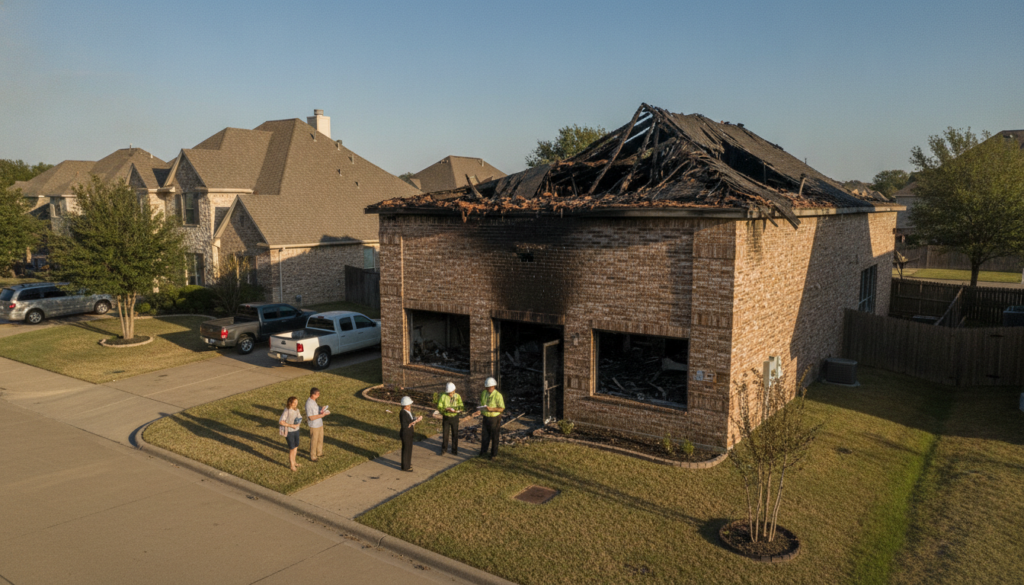
One early morning, before the doors opened, a fryer that had been left on overnight overheated. The fire started small, spread to nearby grease buildup, and within minutes had damaged a section of the kitchen. The sprinkler system and the fire department kept it from taking the whole suite, but the damage was serious. Fire and smoke got into the equipment and inventory. Water and chemicals from the firefighting effort added their own mess. The kitchen could not legally or safely operate until it was cleaned, inspected, and rebuilt.
This is the moment a lot of owners feel the floor drop out. The business is their livelihood. Their staff depends on the paychecks. Rent and loan payments do not pause just because the ovens are down. This is where a well-built insurance program earns its keep, and where knowing the small business fire insurance claim Dallas process ahead of time makes a real difference.
What the bakery had in place
In our composite, Sweet Corner Bakery carried the two coverages that matter most here: commercial property insurance and business interruption coverage, sometimes called business income coverage. They are separate but linked. One deals with the physical stuff. The other deals with the money the business loses while the physical stuff gets repaired. We will unpack both.
How commercial property insurance responds to fire
Fire is one of the most basic risks commercial property insurance is built to handle. In almost every policy, fire is a core named peril, meaning it is spelled out as something the policy covers. In Texas, many commercial property policies include what is often called Basic Form coverage, which protects against perils like fire, lightning, windstorm, and smoke damage.
For a kitchen fire, standard commercial property coverage typically responds to direct physical loss or damage across several categories:
- The building or leased space: Depending on the lease and policy structure, damage to walls, floors, ceilings, and built-in fixtures may be covered.
- Equipment: Ovens, mixers, fryers, refrigeration units, and other kitchen machinery damaged by the fire.
- Inventory: Ingredients, packaging, and finished goods ruined by flames, heat, smoke, or the response.
- Furnishings and fixtures: Display cases, seating, and counters.
Here is a detail that surprises a lot of business owners. Coverage often reaches beyond the flames. Smoke damage is a big deal in a bakery, where smoke soaks into porous surfaces and packaging. Coverage can also extend to damage from the water or chemicals used to put the fire out. In plenty of kitchen fires, the water and smoke damage runs up a bill as high as the fire itself. When we help someone think through a small business fire insurance claim Dallas scenario, we always point out that the real loss is usually much bigger than the visible burn marks.
Replacement cost vs. actual cash value
This next distinction directly affects how much a claim pays, and it is worth understanding before anything ever happens. Commercial property policies generally settle losses one of two ways:
- Replacement cost: Pays to replace damaged property with new property of similar kind and quality, without a deduction for age or wear.
- Actual cash value: Pays the replacement cost minus depreciation, so an older oven gets valued as an older oven.
For a bakery running expensive commercial equipment for years, the gap between these two approaches can be large. We are not here to tell you which one belongs in your policy. That is a decision to make with an agent, based on your budget and your appetite for risk. We just want you to know the difference exists, so you are not blindsided in the middle of a small business fire insurance claim Dallas process, learning your coverage settles differently than you assumed.
The risk of being underinsured
Coverage limits are a related issue. If a business insures its contents for less than what it would actually cost to replace them, the owner can be left covering the gap out of pocket. Kitchen equipment in particular tends to cost more to replace over time as newer models and safety features arrive. In our composite bakery, the owner had reviewed limits with us the year before and raised the equipment coverage after adding a second oven. That one conversation mattered when the claim came in. This is why we push for an annual coverage review for any DFW small business. Not to sell more, but because equipment lists change, and yesterday’s limits may not match today’s kitchen.
Why business interruption coverage is the quiet hero of a small business fire insurance claim Dallas owners file
Here is the part that keeps a lot of owners up at night, even after the property claim is settled. The ovens can be replaced. The kitchen can be rebuilt. But what happens to the income while all of that drags on?
That is what business interruption insurance, also called business income coverage, is built to address. It only kicks in after physical damage from a covered peril like fire, which means it works hand in hand with the commercial property policy. Property coverage rebuilds the kitchen. Business interruption coverage keeps the business financially alive while the kitchen sits idle.
In a typical structure, business interruption coverage aims to replace lost net income and help cover ongoing operating expenses during the period of restoration. Those ongoing expenses often include:
- Rent or lease payments that continue even though the doors are closed
- Utility bills
- Payroll for employees the owner wants to keep on staff
- Loan payments on equipment or the business itself
For Sweet Corner Bakery, this coverage was the line between reopening and folding. During the weeks the kitchen was being restored, the rent kept coming, the equipment loan payment kept coming, and the owner badly wanted to hold onto the six employees rather than lose trained staff to other jobs. Business interruption coverage was built for exactly this stretch, and it is the piece of the small business fire insurance claim Dallas owners tend to overlook until they need it.
Extra Expense coverage
Many policies also include Extra Expense coverage, which pays for costs a business takes on specifically to cut down the interruption or keep operating. In our composite, the bakery used Extra Expense coverage to set up a temporary arrangement to fill a few already-booked wedding cake orders through a partner kitchen, and to advertise the reopening so customers knew they were coming back. Examples of extra expenses can include:
- Temporary relocation to another space
- Renting equipment to keep partial operations going
- Advertising a temporary location or a grand reopening
- Expedited shipping to get replacement equipment faster
The habit to build here is simple. Keep every receipt. Many of these costs may be reimbursable, but only if you can document them. We tell every client the same thing. During a small business fire insurance claim Dallas recovery, the receipts you keep are the receipts you can potentially recover.
Civil Authority coverage
One more piece is worth knowing. Civil Authority coverage can compensate for lost income when a government order blocks access to your business because of damage to a nearby property from a covered peril. Say the fire had started in the suite next door and the fire marshal closed off the whole retail center for several days. Even if your own space came through untouched, Civil Authority coverage may respond to the income you lose because customers cannot reach you. In packed DFW retail strips where businesses share walls and parking lots, that is hardly a stretch.
Step by step: filing a small business fire insurance claim Dallas owners can follow
Now let’s walk through the actual process, the way we walked our composite bakery owner through it. Texas has specific rules that govern the timeline, and knowing them helps you hold everyone accountable and cuts down the sense of chaos. Here is the sequence we recommend for any small business fire insurance claim Dallas business owners face.
1. Put safety first
Nothing on this list matters more than people. Make sure every employee and customer is safe and accounted for. Do not re-enter the premises until the fire department or other authorities say it is safe. Property can be repaired and income can be restored. Injuries cannot be undone.
2. Contact emergency services and document the incident
Call the fire department, and the police if needed. Beyond the obvious safety reason, this creates an official record of the incident, including a fire report, which becomes an important part of your claim file. That documentation supports the small business fire insurance claim Dallas process by establishing what happened and when.
3. Notify your insurer promptly
Contact your agent as soon as you reasonably can. When our clients call us, we help them open the claim and understand what comes next. Texas law sets an important marker here too. Insurers must acknowledge receipt of a claim and begin their investigation within 15 calendar days. Knowing that timeline exists helps you judge whether things are moving as they should during your small business fire insurance claim Dallas process.
4. Secure the property
You have a responsibility to take reasonable steps to prevent further damage or theft after the initial event. That might mean boarding up broken windows, covering openings, or arranging security for the site. Keep the receipts for anything you spend doing this, because these costs may be reimbursable under Extra Expense coverage. In our composite, the bakery owner hired a company to board up the front window and tarp a damaged section of ceiling that same day, and kept the invoice.
5. Document all damages thoroughly
This is where careful owners protect themselves. Before any cleanup or repairs begin, photograph and video everything. Get wide shots and close-ups. Then build a detailed inventory of damaged or lost property, ideally with descriptions, approximate ages, and any purchase records you can find. And do not throw away damaged items until the insurer has had a chance to inspect them. A discarded oven cannot be evaluated. Strong documentation is the backbone of every successful small business fire insurance claim Dallas owners file, and it is entirely within your control.
6. Gather financial records for the business interruption portion
For the business income part of the claim, the insurer needs to understand what the business was actually earning before the fire. That means pulling together financial documents like tax returns, bank statements, and profit and loss statements. These records demonstrate lost income and ongoing expenses. Our composite bakery kept clean monthly bookkeeping, which made proving the loss far smoother. If your records are messy, this is a good reason to tighten them up now, long before you ever need them.
7. Work with the adjuster
The insurance company assigns an adjuster to evaluate the damage and prepare an estimate. Be responsive, hand over the documentation you gathered, and walk them through the loss. It can help to get more than one contractor bid for the repairs, so you have a clear, independent sense of what restoration should cost. Multiple bids also give you something concrete to compare against the adjuster’s estimate during your small business fire insurance claim Dallas process.
8. Review your policy carefully
Understand your specific coverage limits, deductibles, and any exclusions, especially on the business interruption side, where waiting periods and restoration definitions can affect what you receive. This is one of the biggest ways we help. Policy language is dense, and a plain-English walkthrough of what your policy actually says takes a lot of the anxiety out of it. Never assume. Always confirm.
9. Claim resolution and your rights
Once a claim is approved, Texas law requires payment be sent within five business days of the approval notice. That said, delays, denials, and undervalued claims can happen. If they do, policyholders have rights, including the right to question and appeal. Part of our job as a local agency is to act as an advocate and help you understand your options if a small business fire insurance claim Dallas resolution does not go the way you expected. You are not on your own in that process.
What Sweet Corner Bakery’s recovery actually looked like
Let’s pull the composite back together. In the days after the fire, the bakery owner ran through the steps above in roughly that order. Safety first, fire department report, a call to us to open the claim, boarding up the window, and photographing every inch of the kitchen before touching anything.
The commercial property side of the claim handled the damaged ovens, the smoke-soaked packaging inventory, the walk-in cooler that had failed, and the cleanup of water and chemical residue from the firefighting effort. Because the owner had reviewed equipment limits with us the year before, the coverage lined up more closely with actual replacement costs than it would have otherwise.
The business interruption side did the quieter but equally important work. During the restoration period, it responded to lost income and helped cover the fixed costs that did not care whether the ovens were running: the lease, the equipment loan, and payroll for a core group of employees the owner did not want to lose. Extra Expense coverage helped with a temporary arrangement to fill a couple of already-booked catering orders and with advertising the reopening.
Was it smooth start to finish? These claims rarely are. There were questions about the value of certain equipment, some back-and-forth over the restoration timeline, and the ordinary stress of running a business that is not fully operating. But the structure held. The property coverage rebuilt the physical business, and the business interruption coverage kept it financially breathing until the doors could reopen. That combination is the whole point of thinking through a small business fire insurance claim Dallas strategy before you ever need it, not after.
The lessons any DFW small business can take from this
You do not run a bakery? The lessons still apply to nearly every small business in DFW, from a boutique to an auto shop to a coffee roaster. A few takeaways we hope stick:
- Fire coverage is standard, but the details vary. Fire is a core named peril, but how your policy settles losses, and how high your limits are, is where the real outcome gets decided.
- Property coverage alone is not enough. Without business interruption coverage, you can rebuild the space and still run out of cash before you reopen.
- Documentation is power. Photos, inventories, receipts, and clean financial records turn a stressful claim into a manageable one.
- Know the Texas timelines. The 15-day acknowledgment rule and the five-business-day payment rule after approval give you clear markers for what to expect.
- Review annually. Your equipment, revenue, and space change over time. Your coverage should keep up.
How our team approaches a small business fire insurance claim Dallas owners bring to us
When a DFW small business owner calls us after a fire, our first job is to be a calm, clear guide in a moment that feels anything but calm. We help open the claim, we explain what the property and business interruption pieces will each do, and we translate the parts of the policy that are hard to read on your own. We are local, so we know the DFW retail scene, the shared-wall strip centers, and the seasonal swings a bakery, a florist, or a caterer lives through.
We also believe in doing this work before there is ever a fire. A short coverage review is the single best way to make sure that if the worst day comes, your business is set up to recover instead of just scrape by. We will talk through the options, explain the tradeoffs in plain English, and let you make the decisions that fit your business and your budget. We never push. Educating first is simply how we operate.
If you own or run a small business anywhere in Dallas-Fort Worth and you have wondered whether your coverage would actually carry you through a fire or another major loss, that is a conversation worth having before you need it. Reach out to our team at DRH Insurance and let’s walk through your options together. No pressure, just a clear look at how your business would recover if a small business fire insurance claim Dallas scenario ever landed on your doorstep.
Frequently asked questions
Does commercial property insurance cover fire damage for a Dallas small business?
Yes. Fire is a core named peril in almost all commercial property policies, so damage to your building, equipment, inventory, and furnishings from fire is typically covered. Coverage often reaches smoke damage and the water or chemical damage from putting the fire out. The exact limits, and whether it settles on a replacement cost or actual cash value basis, depend on your specific policy, so review those details with an agent.
How long does an insurer have to respond to a fire insurance claim in Texas?
Under Texas law, an insurer must acknowledge receipt of your claim and begin its investigation within 15 calendar days. Once a claim is approved, the insurer must send payment within five business days of the approval notice. Knowing these timelines helps you track whether your claim is moving along as it should.
What is the difference between commercial property and business interruption insurance?
Commercial property insurance pays to repair or replace physical damage to your building, equipment, and inventory after a covered event like a fire. Business interruption insurance replaces the income you lose and helps cover ongoing expenses like rent and payroll while your business cannot operate. They work together, since business interruption coverage only activates after physical damage from a covered peril.
What should I do first after a kitchen fire at my DFW business?
Make sure everyone is safe and do not re-enter the building until authorities say it is safe. Then call the fire department to document the incident and notify your insurer as soon as possible. Before any cleanup, photograph and video all the damage and start a detailed inventory of what was lost.
Will business interruption insurance cover payroll while my business is closed?
In many policies, business interruption coverage is designed to help cover ongoing operating expenses, which can include payroll for employees you want to keep on staff during the restoration period. It can also help with rent, utilities, and loan payments, plus lost net income. The specifics depend on your policy terms, limits, and any waiting periods, so confirm the details with your agent.
What records do I need for the business interruption part of a fire claim?
You will generally need financial documents that show what your business was earning before the loss, such as tax returns, bank statements, and profit and loss statements. These help demonstrate lost income and ongoing expenses during the period your business is disrupted. Keeping clean, up-to-date bookkeeping now makes proving that loss much easier later.
Sources
- About Business Interruption Insurance in Texas – TexasInsurance.org
- Business interruption & other business insurance – Texas Department of Insurance
- Business interruption insurance: a Texas owner’s guide
- Texas Business Interruption Attorney – Arnold & Itkin LLP
- Risks Covered by Commercial Property Insurance in Texas – Thumann Agency
- What Does Business Interruption Insurance Cover in Texas? – Omar Ochoa Law Firm